A buyer touring a one-bedroom in a pre-war Dupont Circle building sees a price tag that looks like a steal next to the condo listing two blocks over. Same square footage, same crown molding, same walk to the Metro. The co-op is priced tens of thousands lower. The buyer's agent explains the building has an underlying mortgage, which sounds like a footnote. It is not a footnote. It is the reason the price looks the way it does, and it is also the reason the board package that follows will ask this same buyer to prove they still have money left over after closing that most condo buyers never have to show anyone.
That is the trade at the center of every co-op purchase in this neighborhood. The discount on the sale price is real. What it saves a buyer in cash at the closing table, it can take back in liquid cash a board wants parked and untouched in the months after. Buyers who understand only the first half of that trade walk into contract negotiations thinking they found a bargain. Buyers who understand both halves know what they are actually signing up for.
The math that makes the price look lower
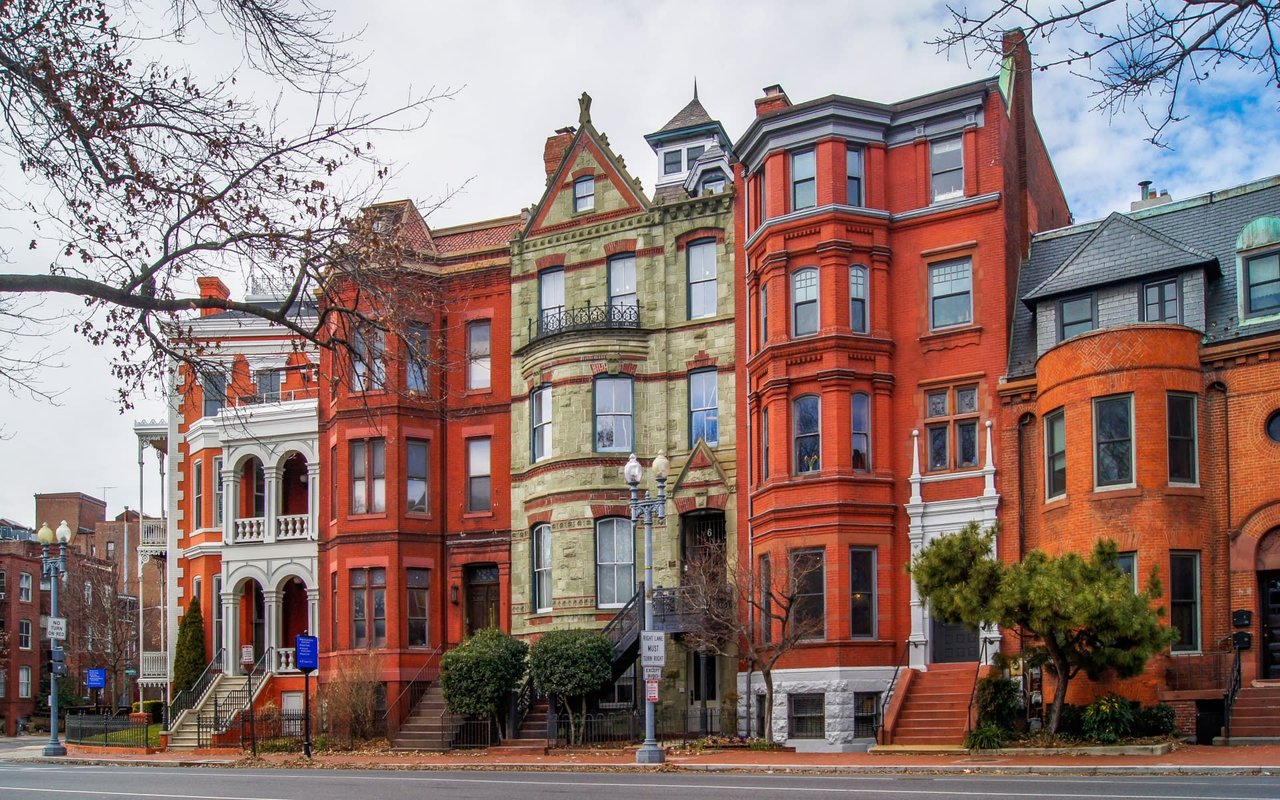
Dupont Circle has more pre-war co-op stock than most Washington neighborhoods, a legacy of buildings that converted from rental apartments to cooperative ownership in the mid-20th century rather than to condominiums. In a co-op, the building itself, not the individual owner, often carries a mortgage. That debt sits on the corporation's books, and each shareholder pays a slice of it every month as part of their maintenance fee.
Here is what that structure does to a buyer's math. If a unit is priced at $300,000 and the building's underlying mortgage covers $130,000 of that value, a buyer is not financing the full sale price. They are financing against the remaining $170,000. A 10 percent down payment on that base is $17,000, not $30,000. The corporation already carries the rest as building debt.
This is the mechanic that makes co-op prices look discounted against comparable condos in the same block. It also explains why maintenance fees on a co-op can run higher than an HOA fee on a similarly sized condo even when the purchase price is lower. The co-op's monthly charge is doing more work: it usually bundles the building's property tax, its insurance, its staff, its reserves, and its share of that underlying mortgage into one line. A condo owner pays HOA dues separately from a property tax bill that comes directly from the District.
None of this is a flaw in co-op ownership. It is simply a different ledger, and a buyer who only compares sale prices without asking what the maintenance fee actually covers is comparing two numbers that are not measuring the same thing.
The number that shows up after the price looks good
The financing discount is where most buyers stop reading. The board package is where the trade evens out.
Co-op boards in Dupont Circle, like co-op boards generally, do not just check a buyer's credit and call it done. A typical resale package asks for tax returns, bank statements, employment verification, personal references, and often a face to face interview. Boards can reject a buyer on financial grounds even when a lender has already approved the loan.
The requirement that catches buyers off guard is post-closing liquidity. Buildings commonly want proof that a buyer will still have cash reserves left over after the down payment and closing costs are paid, sometimes two years' worth of mortgage and maintenance payments, sometimes considerably more depending on the building's own rules. A buyer who used most of their savings to make that smaller down payment on the "discounted" co-op can find themselves short on this second number even though they qualified easily for the mortgage itself.
Debt-to-income limits tend to run tighter in co-ops too, with boards commonly capping total housing costs, mortgage plus maintenance, at a percentage of gross income that is stricter than what a conventional lender would approve on its own. Financing options are narrower as well. FHA and VA loans are rarely available for co-op purchases, which pushes most buyers toward conventional loans or portfolio lenders who specialize in share loans and know how to underwrite a building's finances along with the borrower's.
Put together, the buyer who looked at a lower price and assumed an easier purchase often ends up assembling a thicker financial file, proving more liquidity, and accepting a narrower field of willing lenders than they would have for a condo at a higher price point.
Four buildings, four sets of house rules
Dupont Circle's co-op stock is not uniform, and the rules a buyer signs up for vary building to building even within a few blocks of each other.
The Chastleton, a 1920s Gothic Revival building on the 16th Street corridor, is one of the neighborhood's most recognizable cooperative addresses, restored in 2006 with attention to its original detailing.
Historic Copley Plaza, designed by Harry Wardman, the developer behind many of the neighborhood's grand pre-war apartment houses, is pet friendly and structures its monthly fee to include utilities and property taxes, which can make total cost comparisons against a condo simpler in that specific building, though every unit's assessment history should still be checked individually.
The Northumberland, at 2039 New Hampshire Avenue NW and built in 1910, is often cited as the city's oldest self-managed cooperative, meaning the shareholders run the building's operations directly rather than contracting the work out to a management company. Self-management can mean lower overhead or it can mean slower turnaround on approvals, depending on how active the board is.
The Avondale, built in 1914 one block off the circle, carries its own historic profile and the kind of quiet, tree-lined block setting that draws buyers to this part of the neighborhood in the first place.
None of these buildings share identical sublet policies, flip tax structures, or renovation approval timelines. A rule that applies at one address may not exist two doors down. This is exactly why reviewing a specific building's proprietary lease, bylaws, and recent board minutes matters more in a co-op purchase than in almost any other kind of residential transaction in the District.
The historic district adds a second layer
Much of Dupont Circle sits inside the Dupont Circle Historic District, which means exterior changes to a building, from window replacement to a rooftop addition, can require review beyond whatever the co-op board itself demands. A shareholder who wants to update a window in a unit at a building like the Northumberland or the Chastleton may need to satisfy both the board's internal alteration policy and the district's preservation standards before any work begins. Buyers focused entirely on interior renovation plans sometimes forget that a co-op board's rules are the first gate, not the only one, in a neighborhood with this much protected architecture.
Building the timeline into the offer
Board review routinely adds two to six weeks to a closing beyond what a comparable condo purchase would take, and calendars that only meet monthly can stretch that further. A buyer who writes a contract with the same closing date they would use for a condo, and does not confirm the building's board meeting schedule up front, risks a rate lock expiring before approval comes through.
The buyers who move through this cleanly tend to do three things early: get pre-qualified with a lender who already finances co-ops in this neighborhood, request the building's financial statements and recent board minutes before writing an offer rather than after, and build the board's actual meeting cadence into the contract's closing date rather than guessing at it.
A few questions worth asking before you write an offer
Does DC charge a transfer tax on a co-op sale the way it does on a condo? Because a co-op sale transfers shares rather than a deed, it can avoid the standard recordation and transfer tax that applies to real property. Some buildings still charge their own internal transfer fee, sometimes called a flip tax, set by the proprietary lease or bylaws, so this should be confirmed at the building level rather than assumed.
Can I get an FHA or VA loan for a co-op in Dupont Circle? It is uncommon. Most co-op purchases in this neighborhood go through conventional financing or a portfolio lender experienced with share loans, and confirming this early avoids a financing surprise late in the process.
Can I rent out a co-op unit if my plans change? Sublet policies are set building by building and tend to be stricter than condo rental rules, often limiting subletting to a set number of years or requiring board approval for each tenant. This is worth reviewing before purchase, not after a job relocation forces the question.
If you are weighing a co-op against a condo in Dupont Circle and want a read on how a specific building's rules line up against your financial picture before you fall for a unit, Thomas Kolker can walk through the numbers with you. Request a complimentary consultation and home valuation to start the conversation.