Wondering whether American University Park feels more like city living or a quieter residential pocket? That is one of the biggest questions buyers ask when they start exploring Northwest Washington. If you are trying to picture daily life here, this guide will walk you through the neighborhood’s housing, parks, transit, and overall feel so you can decide whether AU Park matches what you want. Let’s dive in.
AU Park at a Glance
American University Park, often called AU Park, sits in far northwest Washington in Ward 3. It is west of Tenleytown and north of American University’s campus, and it is generally known as a low-rise residential neighborhood rather than a dense commercial district.
That distinction matters when you are comparing neighborhoods in DC. In AU Park, the setting is shaped more by homes, trees, and neighborhood streets than by blocks of storefronts or large apartment buildings.
What the Neighborhood Feels Like
AU Park often feels like a suburban-style neighborhood within the city. Official Ward 3 planning descriptions emphasize residential streets, local commercial centers, and areas that spread outward into single-family homes, and AU Park fits that broader pattern.
For many buyers, that means a quieter day-to-day experience than you might find in more intensely built parts of DC. You still have access to city amenities, but the neighborhood itself is more about homes and streetscape than nonstop activity.
A Look at AU Park’s History
The neighborhood was platted for residential development in 1896 and 1897. Growth moved slowly at first because the area had limited streetcars, gas lines, and water mains.
Development picked up more significantly after World War I. That period helped shape much of the middle-class detached housing that still defines the area today.
Housing Styles in American University Park
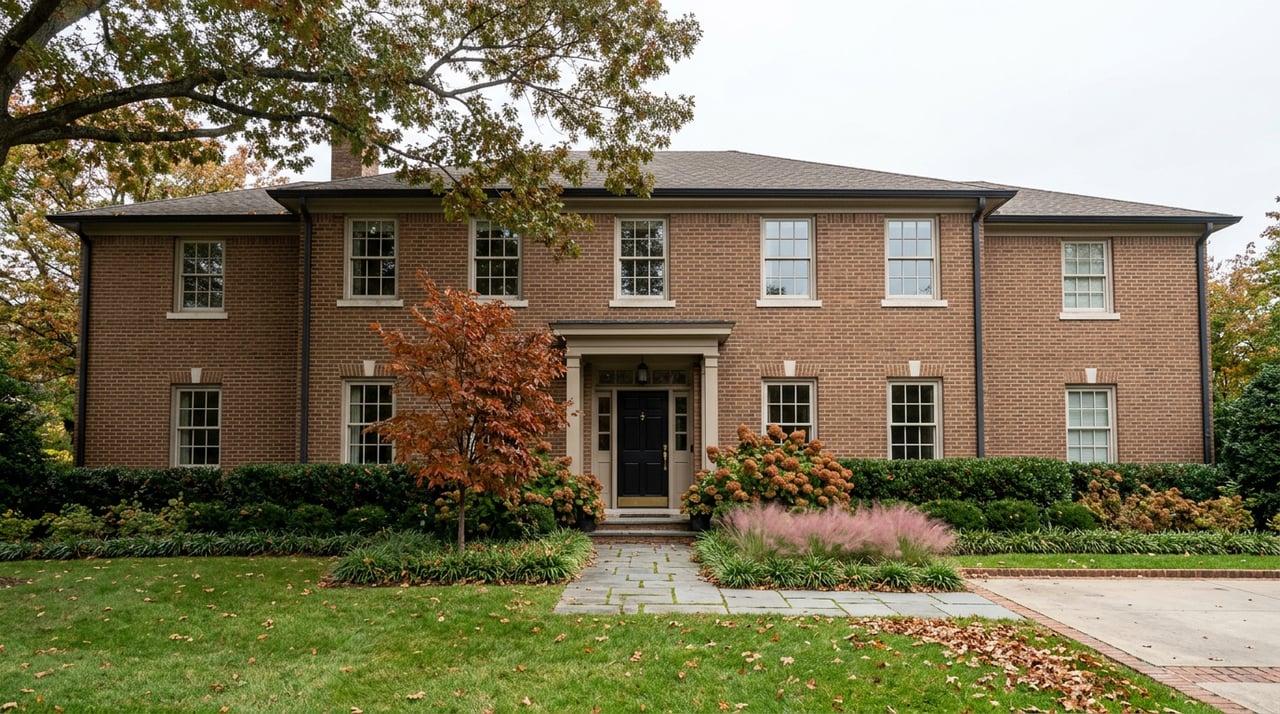
One of AU Park’s biggest draws is its varied housing stock. Preservation and planning records identify pre-subdivision farmhouses, early suburban houses, bungalows, Sears and other catalog houses, semi-detached homes, and later detached brick houses.
That mix gives the neighborhood a layered and established look. Instead of one uniform housing type, you get a streetscape shaped by different building periods and architectural styles.
Bungalows and Catalog Homes
AU Park includes 80 bungalows built between 1921 and 1932, along with 16 Sears and other catalog houses built between 1924 and 1931. These homes add character and help explain why the neighborhood feels visually distinct from many other parts of the city.
For buyers, this can mean more variety as you search. It also means that block-by-block appeal may come from architecture, setbacks, and mature trees rather than from new large-scale development.
Detached Brick Houses and Early Homes
The neighborhood also includes clusters of detached brick houses from the 1930s. The earliest surviving homes are mostly frame Queen Anne dwellings.
In practical terms, AU Park offers a low-rise residential environment with a strong sense of continuity. Historic homes and later infill share the same general pattern of tree-lined blocks and setbacks.
Green Space and Outdoor Access
If access to open space matters to you, AU Park benefits from several nearby recreation and park options. This is one of the reasons the neighborhood can appeal to buyers who want a more relaxed residential setting without leaving Washington.
Nearby parks support everything from casual walks to organized sports and outdoor time close to home. That kind of access can shape how a neighborhood feels on a daily basis.
American University Campus
American University is one of the area’s major institutional anchors. According to the National Park Service, the campus was designed as a 90-acre landscape by Frederick Law Olmsted and Van Brunt & Howe, and parts of the original plan are still visible on the Main Campus, especially around Eric Friedman Quadrangle.
Even if you are not connected to the university, its presence influences the area’s identity. It adds open visual space and a recognizable historic landscape element nearby.
Fort Reno Park
Fort Reno Park is another notable nearby asset. The National Park Service identifies it as the highest elevation in the District, and today it is known for its ball fields, water towers, and concert series.
For residents, that means access to a well-known outdoor destination with both recreation and local character. It is the kind of place that adds texture to neighborhood life beyond your own block.
Friendship Recreation Center and Glover-Archbold Park
Friendship Recreation Center, often called Turtle Park, is located at 45th and Van Ness. It includes ballfields, tennis courts, a splash park, and a basketball court, with Tenleytown-AU listed by WMATA as the nearest Metro station.
Glover-Archbold Park offers a different kind of outdoor experience. The National Park Service describes it as a 183-acre park with a nearly 2.5-mile trail running from Van Ness Street NW to Canal Road NW.
Shopping, Dining, and Daily Errands
AU Park itself is mostly residential, so most retail and dining activity happens nearby rather than in the center of the neighborhood. If you live here, your regular errands and meals out will often take you toward Wisconsin Avenue.
That setup is part of the neighborhood’s appeal for some buyers. You get a residential home base, with everyday conveniences concentrated on nearby commercial corridors.
Wisconsin Avenue as the Main Commercial Spine
The DC Office of Planning describes Wisconsin Avenue, especially in nearby Friendship Heights and Tenleytown, as a corridor anchored by retail, restaurants, and cultural and entertainment uses. The Tenleytown Retail Action Strategy also describes much of the corridor as neighborhood-serving retail and quick-bite restaurants, with a stronger retail hub between Brandywine and Albemarle streets.
In real-life terms, this means AU Park residents usually look to Tenleytown and Friendship Heights for shopping and dining. The experience is generally more neighborhood-serving than high-intensity.
Transit and Commuting in AU Park
For a neighborhood with a residential feel, AU Park has solid transit access. That can be a major advantage if you want a quieter setting without giving up the ability to get around the city.
Tenleytown-AU is the main rail anchor for the area. WMATA notes that the station is on the Red Line, near American University’s campus, and located on Wisconsin Avenue north of Albemarle Street.
Metro and Bus Connections
The Tenleytown-AU station is also an important transfer point for Metrobus connections. WMATA specifically notes the station should be used for Metrobus transfers to National Cathedral.
For many residents, Wisconsin Avenue functions as the key transit spine. That gives you practical access to rail and bus service while living in a neighborhood that remains primarily residential.
Major Roads and Local Access
Historic documentation places AU Park between Massachusetts Avenue, Western Avenue, River Road, and Nebraska Avenue. Those boundaries help explain why the neighborhood has straightforward access to several major surface routes.
So while AU Park is not built around a commercial core, it is still well connected. That balance can be appealing if you want convenience without living directly on a busy retail strip.
Is AU Park Right for You?
If you are drawn to low-rise residential streets, varied detached housing, nearby green space, and access to retail and transit just outside the neighborhood core, AU Park may be a strong fit. It tends to appeal to buyers who want a quieter version of city living while staying connected to Northwest Washington amenities.
It may be especially worth a look if you value neighborhood character and a more established streetscape. AU Park is less about density and constant activity, and more about residential setting, architectural variety, and proximity to nearby conveniences.
If you are considering a move in Northwest DC and want practical, neighborhood-specific guidance, Thomas Kolker offers a no-pressure, client-first approach to help you evaluate your options and move with confidence.
FAQs
What is the overall feel of American University Park in DC?
- American University Park generally feels like a low-rise, residential neighborhood in far northwest Washington, with a quieter suburban-in-the-city character rather than a dense urban core.
What types of homes are found in American University Park?
- The neighborhood includes pre-subdivision farmhouses, early suburban houses, bungalows, Sears and other catalog houses, semi-detached homes, detached brick houses from the 1930s, and some early frame Queen Anne homes.
Where do American University Park residents shop and eat?
- Most residents go to nearby Wisconsin Avenue corridors in Tenleytown and Friendship Heights, where the retail mix includes neighborhood-serving shops, restaurants, and quick-bite dining options.
How do you commute from American University Park without a car?
- Many residents use the Tenleytown-AU Metro station on the Red Line, along with Metrobus connections on and around Wisconsin Avenue.
What parks are near American University Park?
- Nearby outdoor spaces include Fort Reno Park, Friendship Recreation Center, and Glover-Archbold Park, along with the landscaped grounds around American University’s campus.